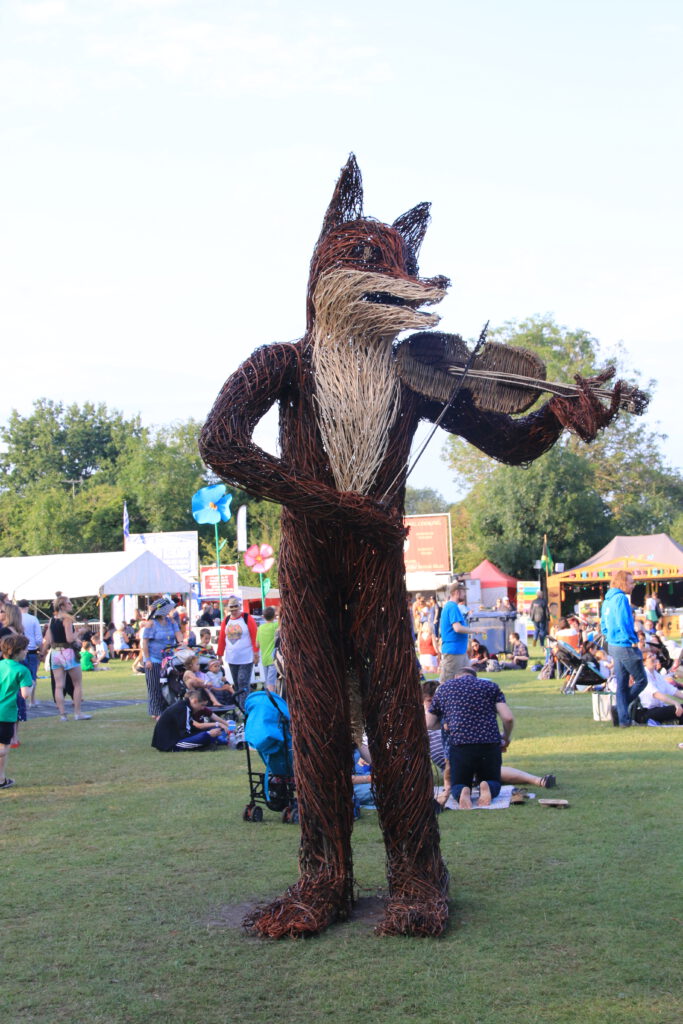
Here are some excellent folk and traditional songs:
- “Blackbird” (often performed in folk circles, though written by Paul McCartney)
The blackbird’s wings and flight symbolize freedom and transformation. - “The Cuckoo” (traditional American/English folk song)
The cuckoo bird is central to the lyrics, with imagery of flying and seasonal change. - “She’s Like the Swallow” (traditional Newfoundland folk song)
The swallow’s flight and wings are important symbols throughout the song. - “Wild Goose” (traditional Scottish and Irish variants exist)
Uses migratory birds and flight as metaphors for longing and exile. - “The Grey Goose” (traditional American folk song)
A folk narrative built around a goose, a bird whose wings and resilience are key parts of the imagery. - “Fly Away” / “I’ll Fly Away” by Albert E. Brumley
A gospel-folk standard where wings and flight represent spiritual liberation. - “The Lark in the Morning” (Irish traditional)
The lark’s soaring flight is central to the song’s imagery. - “Bird on the Wire” by Leonard Cohen
More contemporary folk, but the image of a bird attempting freedom is fundamental. - “The Eagle and the Hawk” by John Denver
Folk-inspired song celebrating the freedom of flight and the power of wings. - “What’s the Use of Wings?” by Brian Bedford
A modern folk song built explicitly around the refrain “What’s the use of wings if you can’t fly?”
For traditional British and Irish folk song, wings most often appear through birds as messengers, symbols of freedom, omens, or transformed lovers rather than as literal winged flight. Here are some notable examples:
Irish
The Lark in the Morning
- Perhaps the clearest example.
- The lark’s soaring flight opens the song and serves as a symbol of youth, vitality, and freedom.
She’s Like the Swallow (Newfoundland, but derived from British and Irish traditions)
- The swallow’s wings and movement are central metaphors for love and loss.
An Cailín Rua / The Red-Haired Girl (various Irish versions)
- Includes imagery of wild birds escaping on the wing, contrasting with human constraints.
The Wild Geese
- Refers to the Irish soldiers who left Ireland for continental Europe.
- The flight of geese becomes a metaphor for exile and migration.
English
The Cuckoo
- One of the most widespread traditional songs.
- The cuckoo’s arrival „on the wing“ marks the changing seasons and the unpredictability of love.
The Two Magicians
- Features shape-shifting, including transformations into birds.
- Wings become a means of escape in the magical chase.
The Three Ravens
- Ravens are central characters whose ability to fly gives them a privileged view of human events.
The Outlandish Knight
- In some variants, singing birds warn or comment on the action.
The Swan Maiden (ballad family and related folk tales)
- Swan-wings or feather cloaks are essential to the plot.
- A woman loses and later regains her power of flight.
Scottish
The Twa Corbies
- Like The Three Ravens, built around carrion birds.
- Their wings enable them to act as observers of human fate.
The Great Silkie of Sule Skerry
- A selkie ballad, not about wings directly, but often grouped with transformation songs where humans become creatures that move between worlds.
Ballads with Bird Transformations
A fascinating subgroup includes:
- The Twa Sisters
- Binnorie
- The Cruel Sister
In many versions, the murdered girl’s remains become a musical instrument, while birds with wings act as witnesses, messengers, or carriers of supernatural knowledge.
Songs Specifically About Flight and Wings
If you’re looking for songs where wings themselves are more than incidental, the strongest traditional candidates are:
- The Lark in the Morning
- The Cuckoo
- The Wild Geese
- The Swan Maiden traditions
- The Three Ravens
- The Twa Corbies
These all use winged creatures as central symbolic elements rather than merely mentioning birds in passing.
A particularly interesting angle is that in Celtic tradition, birds are often intermediaries between worlds, so wings frequently symbolize passage between the earthly and the supernatural. That makes wings much more significant in Irish and Scottish folk material than one might assume from simply scanning song titles.
If you want literal references to wings themselves, rather than birds simply being present, the corpus narrows considerably. Traditional British and Irish songs tend to mention birds, feathers, flight, and transformation more often than wings as a standalone image.
Some of the best examples are:
The Swan Maiden (folk narrative tradition)
A recurring motif in British and Irish folklore and song is the maiden who wears a cloak of swan feathers. Her wings are literal magical objects that allow flight between worlds. When her feathers are stolen, she is trapped on earth.
The Two Magicians
In some traditional variants, the pursued maiden transforms into birds to escape. The imagery depends on actual flight and wings rather than merely bird symbolism.
The Cuckoo
Several versions include explicit references to the bird taking wing or flying from land to land. The bird’s wings are part of the seasonal imagery rather than purely metaphorical.
The Lark in the Morning
The lark’s ascent is central. While not all versions explicitly mention wings, many traditional performances emphasize the lark „spreading its wings“ or soaring upward.
The Golden Vanity
The opening often describes a ship with spread sails compared to wings. This is not avian imagery, but it is one of the stronger traditional examples of wing-like imagery attached to movement and freedom.
The Wild Geese
In Irish tradition the geese are not decorative background. Their beating wings and migration underlie the metaphor of exile. Some versions and associated poems describe the geese „on the wing“ very explicitly.
The Three Ravens / The Twa Corbies
The ravens are active flying creatures. Their wings matter because they allow them to observe and descend upon the dead knight. The songs are built around what the birds can see from the air.
—
If you’re looking for songs where wings are actually mentioned in the text, a few less common but strong candidates are:
- The Wearie Bird
- The Bonny Birdy
- The Swan Swims So Bonny O
- The Great Silkie (in variants influenced by oral tradition outside the canonical text)
- Various versions of The Wife of Usher’s Well, where the dead sons return wearing hats adorned with birch and bird feathers, giving a striking wing-and-feather visual motif.
My impression is that genuinely wing-centric traditional songs are surprisingly rare. In British and Irish folk tradition, the more common image is not „wings“ but feathers. Feathers often function as magical objects that grant transformation, especially in swan-maiden and shape-shifting tales.
If your interest is literary or thematic, I can also compile a list specifically of folk songs featuring:
Distinct motifs in the tradition
That’s a useful distinction. Looking back, I mixed together attested song texts and broader folklore themes. For a rigorous list, I’d separate them like this:
Songs where wings, flight, or winged creatures are clearly present in surviving lyrics
The Lark in the Morning
Verified in song tradition: yes.
The lark is a central subject, and many collected versions describe the bird rising or soaring. The imagery depends on actual flight, though not every version explicitly uses the word wings.
Category: literal bird-flight imagery.
—
The Cuckoo
Verified in song tradition: yes.
Traditional texts regularly describe the cuckoo flying, arriving, or moving through the landscape. Again, literal bird imagery rather than symbolic wings.
Category: literal bird-flight imagery.
—
The Three Ravens
Verified in song tradition: yes.
The entire song is structured around ravens observing events and then descending. Their ability to fly is essential to the narrative.
Category: literal winged creatures.
—
The Twa Corbies
Verified in song tradition: yes.
As with The Three Ravens, the corbies (ravens) are active flying birds whose perspective drives the story.
Category: literal winged creatures.
—
The Bonny Birdy
Verified in song tradition: yes.
A talking bird serves as messenger and intermediary.
Category: literal bird imagery.
—
The Wife of Usher’s Well
Verified in song tradition: yes.
The returning sons are often described wearing hats adorned with birch and feathers. The song contains explicit feather imagery, though not wings proper.
Category: feather imagery.
—
Songs often associated with wing motifs, but where the motif comes mainly from folklore rather than the surviving lyric
Swan Maiden traditions
Not primarily a folk song corpus.
The winged swan-cloak is a major folktale motif known throughout Britain and Ireland, but the famous wing imagery belongs primarily to narrative folklore rather than commonly sung ballads.
Category: folklore motif.
—
Shape-shifting chase tales
Examples related to The Two Magicians.
Bird transformations occur in some variants and related tales, but the prominence of wings varies considerably by text.
Category: mixed ballad and folklore motif.
—
Wild Geese symbolism
The image of migrating geese is important in Irish poetry and nationalist tradition.
Actual references to wings are much more prominent in associated poems than in the best-known folk-song texts.
Category: folklore and poetic symbolism.
—
Songs with explicit „wing“ language
This is where the list becomes surprisingly short.
In the major English, Scottish, and Irish traditional repertoires, the word „wing“ itself occurs much less frequently than modern listeners expect. Traditional singers generally emphasize:
- birds,
- feathers,
- flying,
- soaring,
- shape-shifting into birds,
rather than describing wings directly.
If your criterion is „the lyrics explicitly mention wings“, I know of relatively few canonical British-Irish traditional songs where wings are a central recurring image. Many modern folk songs do this, but the older tradition tends to focus on the bird as a whole rather than its wings.
For scholarly purposes, I’d rate the strongest verified examples as:
- The Lark in the Morning
- The Cuckoo
- The Three Ravens
- The Twa Corbies
- The Bonny Birdy
- The Wife of Usher’s Well (feathers rather than wings)
and treat Swan Maidens, winged transformations, and various magical bird-women primarily as folklore motifs unless discussing a specific collected text.